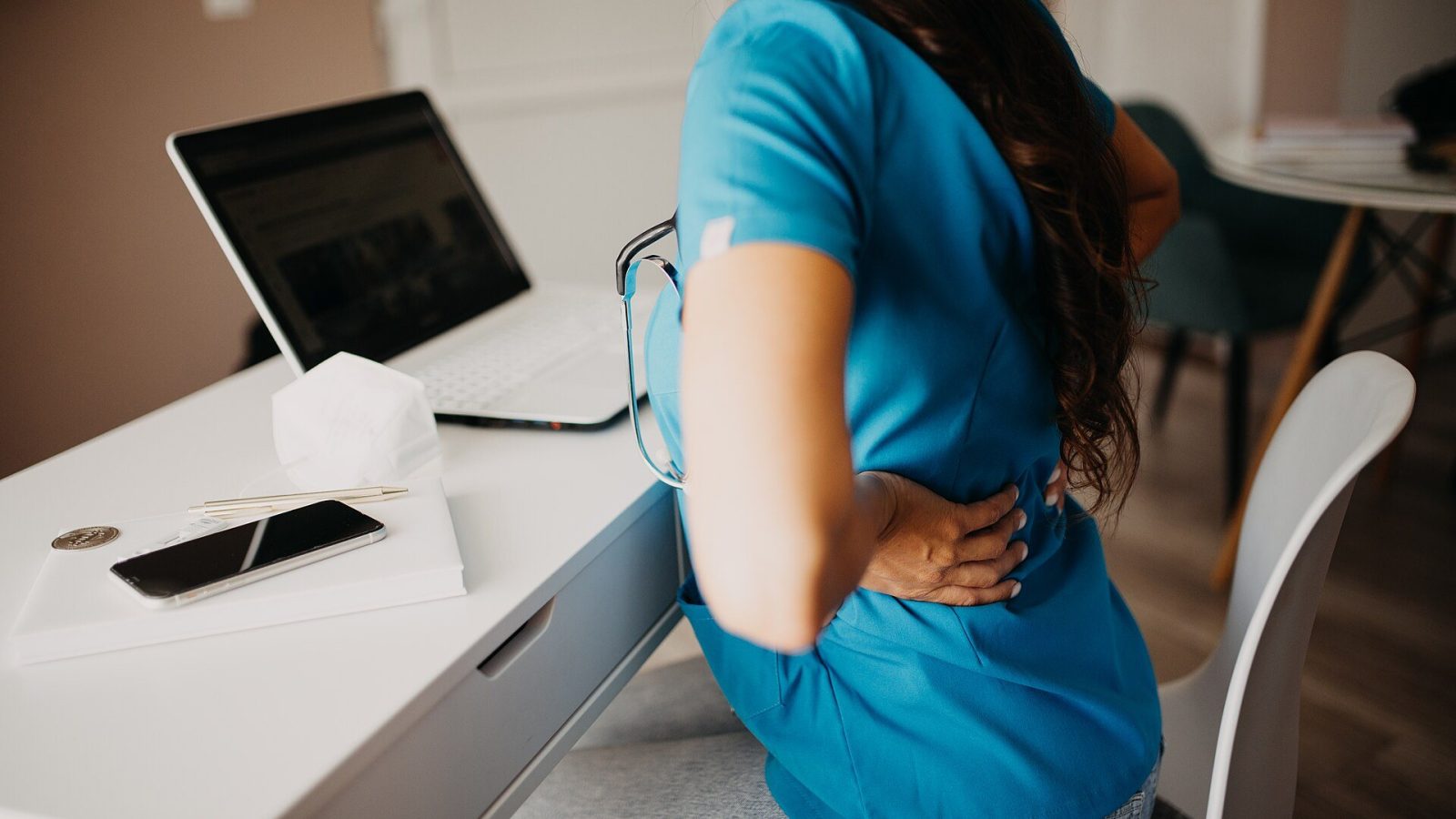
Most lower back pain is mechanical: it comes from strained muscles and ligaments, not from serious disease, and improves within days to weeks. The problem is usually not sitting itself, but staying in the same position for hours without moving.
Seven habits that protect your back
- Move every 30 to 45 minutes: stand up, walk to get water, or take your calls standing.
- Set up your screen: its top edge at eye level, an arm’s length away.
- Sit well: feet flat on the floor, knees roughly level with your hips, and the chair supporting your lower back; a small cushion is enough.
- Raise your laptop: if you work on it for hours, use a stand and a separate keyboard.
- In the car: move the seat close enough to keep your knees slightly bent, keep your back against the backrest, and stop for a walk on long drives.
- Walk every day: twenty to thirty minutes is enough; in summer choose an air-conditioned walkway or the early hours.
- Strengthen your core: simple exercises twice a week protect your back more than any expensive chair.
Three moves in two minutes
- Cat and camel: on your hands and knees, slowly arch your back up, then let it sag down, ten times.
- Glute bridge: lying on your back with knees bent, lift your hips and lower them slowly, ten times.
- Hip flexor stretch: kneeling on one knee, gently push your hips forward for twenty seconds on each side.
Stop if the pain gets worse or spreads down your leg, and ask a physiotherapist for an alternative that suits you.
When to see a doctor without delay
- Pain after a fall or an accident.
- Weakness in a leg that is getting worse, or numbness spreading down it.
- Pain with a fever or unexplained weight loss.
- Severe pain at night that does not ease with rest.
- Numbness between the thighs, or trouble controlling your bladder or bowels: this is an emergency, so go to the nearest emergency department or call an ambulance on 123.
When physiotherapy helps
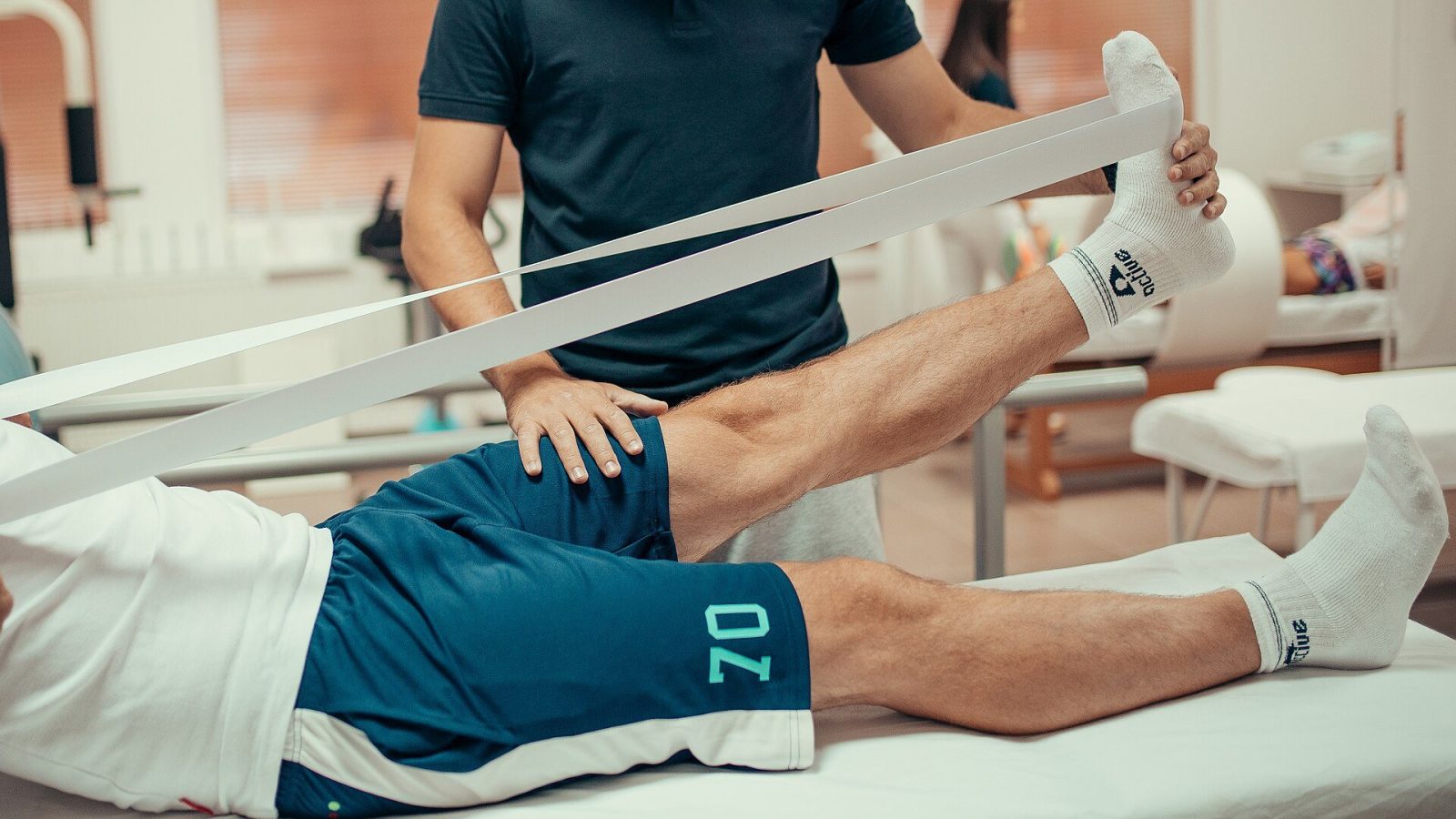
If the pain lasts more than two weeks, comes back every few months or spreads down your leg, physiotherapy with a home exercise programme speeds up recovery and makes the pain less likely to return.